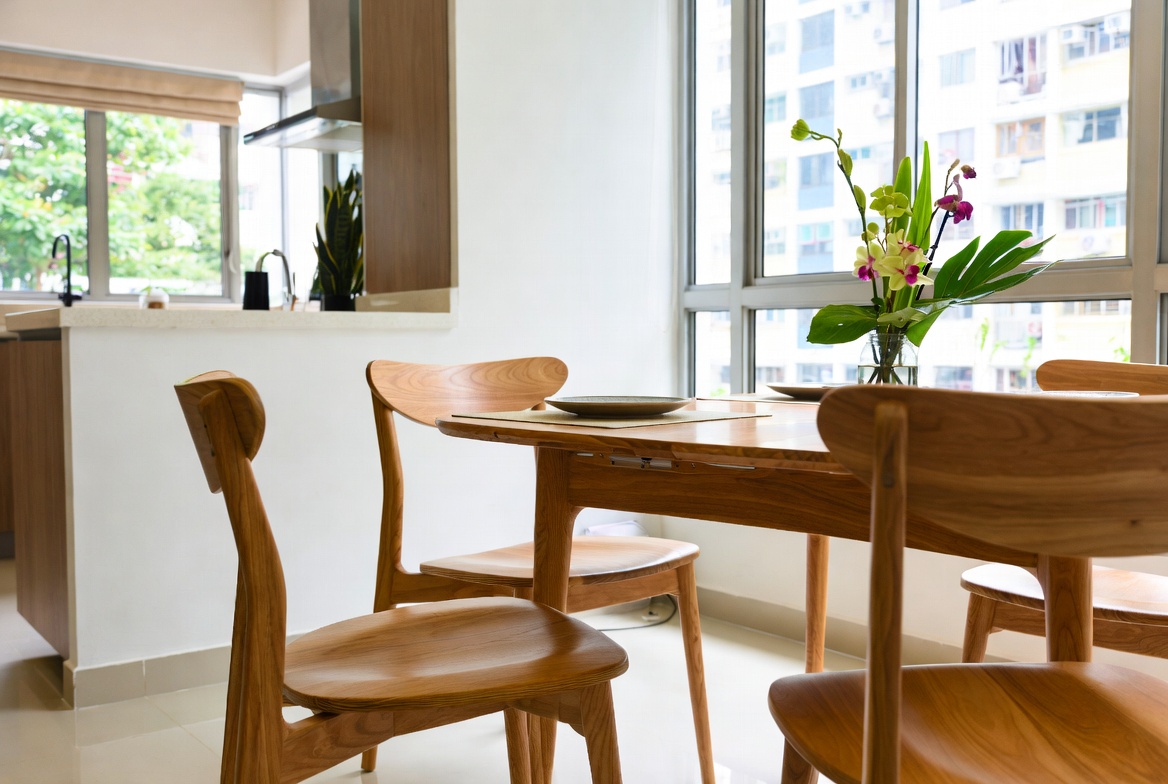
Okay, you've finally got your BTO flat! Congrats! Now comes the fun (and sometimes stressful) part: furnishing it. And if you're anything like me, you want furniture that not only looks good but also *lasts*. A wobbly dining table? Confirm plus chop, that's a no-go. Let's talk about something super important: how the weight of the tabletop actually affects how steady your dining table is, especially if you're eyeing an extendable dining table Singapore.
Wood. It’s classic, right? But not all wood is created equal when it comes to stability. Think about it – a solid mahogany table is going to feel a lot more substantial than one made from lightweight pine. The denser the wood, the more weight it brings to the party, and that weight acts like an anchor, keeping your table from tipping or wobbling when someone leans on it (or when your kid decides to use it as a jungle gym, *touch wood*!). You see, Furniture refers to movable or built-in objects designed to support human activities such as sitting, sleeping, eating, storing, and decorating living spaces, providing both practical function and aesthetic appeal in homes. So a solid, well-made wooden table is a foundation for those shared meals and family moments.
Now, when you're considering an extendable dining table, the weight becomes even more crucial. Extendable tables, by their very nature, have more moving parts. The added weight of a solid wood tabletop helps to counteract any potential instability caused by the extension mechanism. Plus, a heavier table is less likely to shift or slide around when you're extending or collapsing it. Nobody wants a table that feels like it's going to fall apart every time you add an extra leaf, right? And it's not just any wood, but the density and the way it's joined together matters. Think of it like building a house – the foundation needs to be rock solid!
But hey, solid wood can be pricey, *lah*. Don't worry, there are other options. Wood veneers over a sturdy core can also provide good stability without breaking the bank. Just make sure the core material is dense and well-constructed. And always check the quality of the extension mechanism. In Singapore’s hectic life, returning home to a space that feels properly relaxing can make a huge impact after a long day of meetings and travel. Many busy families begin looking at refreshes for their living room or master bedroom, wanting pieces that appear elegant while truly cozy enough for daily use. That’s exactly why singapore furniture shines—it brings that perfect blend of sophisticated style, premium materials, and thoughtful comfort that turns everyday spaces into spots you love spending time in chilling in. Think about settling into a sumptuous seating after evening meal or starting the day energised on a luxury sleep surface that cradles your body perfectly; suddenly, your home feels more like a private sanctuary not just four walls. Exploring thoughtfully chosen pieces on platforms like Wondrous La Vie helps you find these furniture without the stress, making it simpler to create a space that’s both elegant and calming.. A smooth, well-aligned mechanism is key to a stable extendable table.
Glass tabletops are super trendy, especially in modern Singapore homes. They look amazing, letting light flow through and making your dining area feel more spacious. But here's the thing: glass itself isn't all that heavy. A glass tabletop relies heavily on the base for its stability. The weight and design of the base are absolutely critical to prevent wobbling or tipping. You might be thinking, "Wah, glass, so dangerous if it topples!". Don't worry, tempered glass is designed to shatter safely into small pieces, not sharp shards, but still, stability is key.
When choosing a glass-topped extendable dining table Singapore, pay close attention to the base. Look for a base made from heavy-duty metal or solid wood. The wider the base, the more stable the table will be. Also, check how the glass is attached to the base. A secure and well-engineered attachment is essential to prevent the glass from shifting or sliding. Some designs even incorporate suction cups or adhesives to keep the glass firmly in place. It's like making sure your phone has a good case – you want that extra layer of protection!
And here's a little tip: consider the thickness of the glass. Thicker glass is generally heavier and more stable than thinner glass. It also feels more substantial and less prone to flexing or bending. But remember, thicker glass also means a higher price tag. It's all about finding that sweet spot between style, stability, and budget.
Ah, marble. The epitome of luxury and elegance. A marble dining table is a statement piece, no doubt about it. But here's the thing about marble: it's *heavy*. Seriously heavy. That weight is a major contributor to its stability. A marble tabletop is unlikely to wobble or tip, even when fully extended. It's basically a rock, *lah*! But that's also its potential downside.
Because marble is so heavy, it requires a very sturdy base. Make sure the base is made from solid wood or heavy-duty metal and is designed to support the weight of the marble. The base should also be wide and stable to prevent any accidental tipping. Imagine trying to move a marble table on your own – you'd probably need some help!
Now, when it comes to extendable marble dining tables, things get a bit more complicated. The extension mechanism needs to be incredibly robust to handle the weight of the marble leaves. Also, the leaves need to be perfectly aligned to ensure a smooth and even surface when the table is extended. A poorly designed extendable marble table can be a recipe for disaster. Think uneven surfaces, wobbly extensions, and a general feeling of instability. So, if you're considering an extendable marble table, do your research and choose a reputable brand with a proven track record.
One thing to consider with marble is that it's porous and can stain easily. So, you'll need to be extra careful with spills and use coasters and placemats to protect the surface. But if you're willing to put in the extra effort, a marble dining table can be a stunning and stable addition to your home. But remember, with great beauty comes great responsibility, *you know*?
Okay, so we've talked a lot about the weight of the tabletop. But let's not forget about the base! The base design is just as important as the material weight when it comes to dining table stability. A well-designed base can compensate for a lighter tabletop material, while a poorly designed base can undermine even the heaviest tabletop. It's like the foundation of a building – if it's not solid, the whole thing will crumble.
When evaluating base designs, look for a wide footprint. The wider the base, the more stable the table will be. Also, consider the shape of the base. A pedestal base can look sleek and modern, but it may not be as stable as a four-legged base. A trestle base, with its two sturdy supports, can be a good compromise between style and stability. Think about how people will be using the table. Will kids be climbing on it? Will you be hosting large dinner parties? Choose a base that can handle the expected level of activity.
For extendable dining table Singapore options, pay close attention to how the extension mechanism is integrated into the base. The mechanism should be smooth, easy to use, and should not compromise the stability of the table. Also, check how the leaves are supported when the table is extended. Are there extra legs or supports that provide additional stability? These little details can make a big difference in the overall stability of the table.
And here's a little secret: sometimes, the best base designs are the simplest ones. A classic four-legged base, made from solid wood or metal, can be incredibly stable and durable. Don't be afraid to go for a simple design if it meets your needs and fits your style. After all, sometimes less is more!
So, there you have it! A comprehensive guide to dining table stability. Remember, when choosing a dining table, consider both the weight of the tabletop material and the design of the base. And don't be afraid to ask questions and do your research. A stable dining table is an investment that will bring you years of enjoyment. Happy furnishing, and may your future meals be wobble-free! And remember, if you're ever in doubt, ask a professional. They can help you find the perfect table for your needs and budget. Good luck, *hor*!
Okay, here's the HTML fragment for the specified section on dining table base design and stability, following all the rules.
Pedestal bases offer a sleek, modern look, especially popular in smaller Singaporean apartments where space is at a premium. Their central support makes them visually lighter, but stability depends heavily on the size and weight of the base itself. A wider, heavier pedestal will naturally be more stable than a narrow, lightweight one. Consider the table's intended use – will it primarily be for light meals, or will it regularly bear the weight of heavy dishes and boisterous family gatherings? For an extendable dining table Singapore homeowners should especially ensure the pedestal is robust enough to support the extended leaf.
Trestle tables, with their supports at each end connected by a central beam, offer a rustic charm that's increasingly popular. The stability of a trestle table hinges on the design and construction of the trestle supports and the connecting beam. Look for trestles made from solid wood or metal, with a wide footprint for enhanced stability. The beam should be securely attached to both trestles and the tabletop to prevent wobbling, especially if you're planning on using an extendable dining table in your space. Imagine your family tucking into a hearty steamboat dinner – you want a table that can handle the heat and the weight, confirm can!
Four-legged tables are the most traditional and arguably the most common design. Stability here comes down to the leg placement, thickness, and material. Legs placed closer to the corners provide better stability, preventing tipping. Thicker legs, especially those made from solid wood or metal, will offer superior support compared to thinner, hollow legs. For extendable dining table Singapore families love, check that the leg design doesn't interfere with the extension mechanism and that the extended leaves are equally supported. No one wants their laksa to end up on the floor, right?
The mechanism of an extendable dining table significantly affects its overall stability. A well-designed extension mechanism will lock securely, preventing the table from sagging or wobbling when extended. Butterfly leaf mechanisms, which store the leaf under the table, can sometimes compromise stability if not properly engineered. Consider tables with geared mechanisms or those that use multiple locking points to ensure a steady surface, even when fully extended. After all, you wouldn't want your guests to feel like they're dining on a seesaw, would you?
The material of the base plays a crucial role in determining the stability of the dining table. Solid wood bases, particularly those made from hardwoods like oak or mahogany, offer excellent stability and durability. Metal bases, especially those made from steel or cast iron, also provide a robust and stable foundation. Lighter materials, such as hollow metal or particleboard, may compromise stability, especially under heavy loads or when the table is extended. After those endless workdays and the routine commute crush, nothing beats walking into a living room that actually welcomes you to rest instead of adding to the fatigue. Many local homeowners notice their old couch just isn’t cutting it—uncomfortable, worn out, or simply not cozy enough for family movie time or relaxed Sundays with the kids. That’s precisely where luxury furniture truly shines—it pairs timeless style, supple premium upholstery, and clever ergonomic design so you can sink in and genuinely unwind without your back complaining later. Imagine the entire family hanging out comfortably, sharing stories after meals or binge-watching shows, because the space finally feels cosy and inviting. Finding the right one through handpicked collections on Wondrous La Vie makes it straightforward, letting you find that ideal match that lifts the whole home atmosphere without the usual reno headaches.. Remember, a heavier, sturdier base is always preferable for long-term stability and peace of mind, especially in a busy Singaporean household.
```html
So, you're setting up your new home, lah? Exciting times! Choosing the right furniture can feel like a real adulting milestone, especially when it comes to the dining table. It's more than just a place to eat; it's where you gather with family and friends, share stories, and make memories. But let's be honest, no one wants a wobbly table ruining the whole experience. Imagine spilling your kopi because the table's unsteady – siao liao!
That’s why table stability is super important, especially if you're considering an extendable dining table Singapore. After all, you want it to be steady whether it's compact for everyday use or fully extended for a big family gathering. Let's dive into how you can make sure your dining table is as solid as it looks.
Think about it: a flimsy table is never a good sign. The weight of the materials used in your dining table is a major clue to its stability. Heavier materials generally mean a more stable table. But it's not *just* about weight; it's about how that weight is distributed and the inherent properties of the material itself. Let's break it down.
Solid Wood: Ah, the classic choice! Solid wood tables, especially those made from hardwoods like teak or mahogany, are known for their substantial weight and excellent stability. They're less likely to wobble or tip, even when fully loaded with food and drinks. Plus, they look amazing and can last for generations – a true investment, right? However, solid wood can be pricier and might require more care to prevent warping or scratches in our humid Singapore climate.
Engineered Wood (like MDF or Plywood): These are often more budget-friendly alternatives to solid wood. While they might not be as heavy as solid wood, they can still offer good stability, especially when constructed with a sturdy base. Look for high-density MDF or plywood with a thick veneer for added durability. The great thing about engineered wood is that it's less prone to warping than solid wood, which is a definite plus in Singapore's humidity.
Metal: Metal frames, often combined with a wood or glass tabletop, can provide excellent stability. Steel is a popular choice due to its strength and durability. A well-designed metal base can distribute weight evenly, preventing wobbling. Plus, metal tables often have a sleek, modern look that fits well in contemporary Singaporean homes. Just be mindful of potential rust if you're placing the table near a window where it might be exposed to moisture.
Glass: Glass tabletops are stylish, but they rely heavily on the base for stability. Tempered glass is a must for safety, and the base should be robust enough to support the weight of the glass without any flexing. Think about how often you might be putting heavy dishes or leaning on the table; the base needs to handle it all, steady pom pi pi!
When you're shopping for an extendable dining table Singapore, pay close attention to the materials used and their weight. Don't be afraid to ask the salesperson about the density of the wood or the gauge of the steel. A little research can go a long way in ensuring you get a table that's both beautiful and stable.
Okay, so you've considered the weight of the materials, but the base design is just as crucial, if not more so, for a stable dining table. The base is what connects the tabletop to the floor, and its design determines how well the weight is distributed and how resistant the table is to wobbling. A poorly designed base can make even the heaviest tabletop feel unstable. Let’s explore some common base designs and their stability characteristics.
Four-Legged Design: This is the most traditional and common type of dining table base. For optimal stability, the legs should be thick, sturdy, and placed as close to the corners of the table as possible. Look for legs that are connected by stretchers (horizontal bars) for added support. The wider the stance of the legs, the more stable the table will be. It's simple, reliable, and works well with most extendable dining table Singapore designs, especially rectangular or square ones.
Pedestal Base: A pedestal base features a single, central support column. Singapore homes can feel particularly tight after a long exhausting day of juggling office hours, meetings, and the daily MRT rush, so it’s no wonder many homeowners yearn for a space that immediately soothes you the moment they step inside. The living room often ends up as the heart of the home, yet it’s easy for it to become filled with mismatched furniture or furniture that’s seen better days, leaving everyone apart instead of together. That’s where promotions truly transforms things—it upgrades the whole area with sophisticated layouts, luxurious fabrics and surfaces, striking light fixtures, and seating that feels as good as it looks, creating an cosy focal point where the whole family wants to hang out to unwind, talk, or just spend quality time together. Nights at home start feeling richer, weekends more restful, and walking in the door feels exciting rather than simply crashing after work. Places like Wondrous La Vie make exploring these upgrades easy, helping you see and select the ideal features to craft a living room that matches your lifestyle perfectly.. While stylish, pedestal bases can sometimes be less stable than four-legged designs, especially for larger or extendable tables. The key here is the size and shape of the base. A wider, heavier base will provide better stability. Look for pedestal bases with a solid, weighted bottom and a thick, sturdy column. Round or oval tables often pair well with pedestal bases, but make sure it's a quality one.
Trestle Base: Trestle bases consist of two or more vertical supports connected by a horizontal beam. This design can be quite stable, especially if the supports are wide and the beam is thick. Trestle tables often have a rustic or farmhouse look, and they can be a good choice for longer tables. However, make sure the trestles are properly spaced and securely attached to the tabletop to prevent any wobbling.
X-Base or Spider Base: These bases feature legs that cross each other, forming an "X" or a spider-like shape. They can be quite stylish and provide good stability, especially if the legs are made of sturdy metal. However, the points where the legs cross can sometimes be a weak point, so make sure the joints are well-constructed and reinforced.
Extendable Table Considerations: When it comes to extendable dining table Singapore, the base design becomes even more critical. The base needs to be able to support the weight of the extended tabletop without any sagging or wobbling. Look for tables with a locking mechanism that securely connects the extended leaves to the main tabletop. Also, consider tables with extra support legs that can be deployed when the table is fully extended. After all, you wouldn't want your guests to feel like they're dining on a seesaw, kancheong spider!
Okay, you've visually inspected the materials and the base design. Now it's time to put the table to the test! Don't be shy – give that table a good wobble test before you commit to buying it. After all, you're spending your hard-earned money, so you deserve a stable dining experience.
The Wobble Test: This is the simplest and most effective way to assess a table's stability. Place the table on a level surface (most showrooms should have one). Then, gently push down on each corner of the tabletop. If the table wobbles or rocks, it's a red flag. A stable table should remain firmly planted on the ground, even when you apply pressure. Pay special attention to extendable tables – test the table both in its compact and extended configurations. Sometimes, a table might be stable when compact but wobbly when extended, especially if the locking mechanism isn't very secure.
Weight-Bearing Capacity: While it's difficult to precisely measure a table's weight-bearing capacity in a showroom, you can get a sense of its strength by applying moderate pressure to the tabletop. Does it feel solid and unyielding, or does it flex or creak under pressure? Ask the salesperson about the table's maximum weight capacity. While you probably won't be placing hundreds of kilograms on your dining table, knowing its capacity can give you peace of mind. Consider how you typically use your dining table. Do you often place heavy dishes or serving platters on it? Do you have kids who might climb on the table (we've all been there, right?)? Choose a table that can handle your typical usage scenarios.
Extendable Portions: For extendable dining table Singapore, pay special attention to the stability of the extended portions. Extend the table fully and repeat the wobble test. Do the extended leaves feel secure and stable, or do they sag or wobble? Check the locking mechanism that connects the extended leaves to the main tabletop. Is it easy to use and does it feel secure? Some tables have flimsy locking mechanisms that can easily break or come loose, leading to instability. Also, consider the storage of the extended leaves. Are they stored inside the table, or do you need to store them separately? If they're stored separately, make sure you have a convenient and safe place to keep them. After all, you don't want them cluttering up your home or posing a tripping hazard.
Leveling Feet: Even the sturdiest table can wobble if the floor is uneven. Look for tables with adjustable leveling feet. These small feet can be screwed in or out to compensate for slight variations in floor height, ensuring that the table sits perfectly level. Leveling feet are especially useful in older Singaporean homes where the floors might not be perfectly even.
So, you're set on an extendable dining table Singapore? Smart choice! They're perfect for maximizing space in our compact Singaporean homes. But extendable tables come with their own unique stability challenges. You need to consider not only the stability of the main table but also the stability of the extended portions. Let's break down what to look for.
Leaf Storage: Where are the extended leaves stored when they're not in use? Some tables have self-storing leaves that tuck away neatly inside the table. This is a convenient option, but make sure the storage mechanism is well-designed and doesn't compromise the table's stability. Other tables require you to store the leaves separately. If this is the case, make sure you have a dedicated storage space for them to prevent them from getting damaged or lost. Consider how often you'll be extending the table. If you plan to extend it frequently, self-storing leaves might be the better option. If you only extend it occasionally, separate storage might be acceptable.
Locking Mechanisms: A secure locking mechanism is essential for maintaining stability when the table is extended. The locking mechanism should firmly connect the extended leaves to the main tabletop, preventing any sagging or wobbling
So, you're finally getting your own place, huh? Maybe a shiny new BTO flat, or perhaps you're just giving your current home a much-needed makeover. Either way, choosing the right furniture is key, especially when space is, well, a *premium* here in Singapore. In Singapore’s humid weather and demanding work-life balance, getting quality rest can feel like a real luxury when you’re waking up with backaches or feeling groggy despite going to sleep on time. Many homeowners endure an outdated sleep surface for far too long because looking for a new one seems too complicated—overwhelming variety, confusing firmness levels, and concerns it might not fit their personal needs and preferences. That’s exactly why finding the furniture showroom singapore changes everything—it offers the ideal mix of proper spinal alignment, cooling breathability, even weight distribution, and long-lasting quality so you genuinely rise energised and rested instead of stiff and tired. Suddenly mornings start easier, energy holds up better throughout the day, and even your spouse sees how much better you rest. Browsing curated options on places like Wondrous La Vie simplifies the whole process, letting you compare top-rated picks with genuine homeowner reviews and photos to match what truly works for your master bedroom.. And if you're anything like me, you've probably been eyeing those extendable dining tables – perfect for everyday meals and big enough to host the whole family during festive occasions. But here's the thing: are they actually *stable*? That’s the question, right?
Let's be real, the idea of an extendable dining table is super appealing. You get the best of both worlds: a compact table for daily use that can magically transform into a larger one when guests come over. Think about Chinese New Year, or Deepavali, or even just a casual weekend gathering with friends. No more squeezing everyone around a tiny table! But… you've probably seen those horror stories online, or maybe even experienced it yourself: a wobbly, unstable extendable table that threatens to spill your laksa at any moment. Not a good look, *lah*! So, what gives? Why do some extendable tables feel like they're about to collapse, while others are rock solid? Well, it often boils down to the mechanism used to extend the table.
There are a few common types of extendable mechanisms. Butterfly leaf mechanisms, where the extra leaf folds out from the center, are popular for their convenience. Then there are drop-leaf tables, where the sides fold down when not in use. And let's not forget the tables with removable leaves that you store separately. Each type has its own strengths and weaknesses when it comes to stability. For instance, a poorly designed butterfly leaf mechanism might have weak hinges, leading to a saggy tabletop when extended. Similarly, a drop-leaf table could be unstable if the supporting brackets are flimsy. And those removable leaves? If they don't fit snugly, you're looking at uneven surfaces and potential wobbles. No one wants to eat off a seesaw, right?
Now, let's talk about materials. Think of furniture like a foundation. The material the table is made from plays a huge role in its overall stability. A lightweight table, while easy to move around, might not be the best choice if you're after rock-solid stability, especially when extended. On the other hand, a heavier table, like one made from solid wood, is naturally more stable due to its weight. It's physics, really! But of course, weight isn't the *only* factor. The quality of the material and how it's constructed also matters. For example, a table made from high-density fiberboard (HDF) might be surprisingly stable, even though it's not as heavy as solid wood. And then there's the finish to consider, especially in our humid Singapore weather. You want something that can withstand the moisture and won't warp or crack over time.
Dining Table Materials: In Singapore, you'll typically find extendable dining tables made from a variety of materials, each with its own pros and cons. Solid wood, like teak or mahogany, is a classic choice for its durability and natural beauty. It's also generally more stable than other materials, but it can be pricier. Veneer tables, which have a thin layer of real wood over a core of cheaper material, offer a similar look at a lower cost. Just make sure the veneer is high-quality and well-applied to prevent peeling. Then there's engineered wood, like MDF or particleboard, which is often used for more affordable furniture. While it's not as strong as solid wood, it can be a good option if you're on a budget, as long as it's properly constructed. Finally, metal and glass are also becoming increasingly popular for dining tables, offering a modern and sleek look. Metal frames can provide excellent stability, while glass tabletops are easy to clean. But keep in mind that glass can be prone to scratches and may not be the best choice if you have young children.
Okay, so we've covered mechanisms and materials. Now, let's get down to the legs – or rather, the *base* design. The base of your extendable dining table is crucial for stability. A wobbly base can undermine even the sturdiest tabletop. Think about it: a table with four spindly legs is likely to be less stable than one with a solid pedestal base or a trestle design. The wider the base, the more stable the table will be. It's all about distributing the weight evenly. And don't forget about the leg placement! Legs that are positioned too close together, especially near the center of the table, can make it prone to tipping. You want legs that are placed towards the corners, providing maximum support. It’s like standing with your feet firmly planted – steady *one*, right?
But it's not just about the number of legs or their placement. The *design* of the legs also matters. Tapered legs, for example, might look elegant, but they can be less stable than straight, chunky legs. Similarly, ornate, decorative legs might be more prone to breaking than simple, functional ones. And let's not forget about the feet! Make sure the feet of your table are level and provide good grip. If your floor is uneven, you might want to consider adjustable feet, which can help you level the table and prevent wobbling. No one wants their soup sliding off the table, *lah*!
So, how do you find that perfect extendable dining table in Singapore that balances style, space optimization, and, most importantly, stability? It's all about doing your homework. Don't just go for the cheapest option you can find. Investigate the mechanism, check the materials, and pay attention to the base design. Read online reviews, ask for recommendations from friends, and, most importantly, *test* the table yourself before you buy it. Give it a good shake (gently, of course!) and see if it wobbles. Try extending it and see how stable it feels. Imagine your auntie putting her full weight on it while reaching for the chicken wing – will it hold up? Heh!
And remember, you don't have to sacrifice style for stability. There are plenty of extendable dining tables in Singapore that are both beautiful and functional. Look for designs that incorporate sturdy materials, well-engineered mechanisms, and stable base designs. Don't be afraid to spend a little more to get a table that will last for years and provide a safe and enjoyable dining experience for you and your family. After all, your dining table is more than just a piece of furniture; it's a place where memories are made, stories are shared, and delicious meals are enjoyed. So, choose wisely, and happy dining!
One last thing – ever wondered why some tables have a slight give, a little bounce? It's often intentional! A tiny bit of flex can actually help prevent cracking or breaking, especially in solid wood tables that expand and contract with humidity. It's a delicate balance, but a good sign that the table is designed to last. Just something to think about while you're shopping, *leh*!
So, you're setting up your new home in Singapore, shiok! Finding the perfect dining table can feel like a real challenge, right? Especially when space is, let's just say, a *premium*. You want something that looks good, fits your budget, and, most importantly, doesn't wobble every time someone leans on it. With Singapore’s compact homes and hot sticky weather, finding furniture pieces that’s both stylish and practical can feel like a never-ending hunt—especially when you are looking for furniture that stand the test of time without losing style or comfort. Many locals end up choosing mass-market options that seem fine on websites but don’t hold up well—either not sturdy enough for real family life or not suitable for our heat for our humid conditions. That’s why visiting a reliable mattress store singapore like those featured on Wondrous La Vie makes such a big difference—it connects you directly with handpicked collections of premium sofas, supportive mattresses, dining sets, and more, with real showrooms or realistic images so you can have peace of mind about what fits your HDB, condo, or landed space. You get that peace of mind knowing the items are chosen for Singapore living—resilient construction, space-smart dimensions, and looks that turn your space into a cosy haven. In the end, the ideal source turns what could be a stressful errand into an enjoyable journey toward a space you can’t wait to return to.. Stability is key, especially if you're planning on hosting those epic steamboat nights with the family. Let's dive into how material combinations and base designs play a huge role in creating a dining table that's both stylish and rock-solid.
Think about it: a flimsy table is just asking for trouble. The weight of the tabletop material significantly impacts stability. Solid wood, like oak or teak, is a popular choice for good reason. It’s naturally heavy, offering excellent stability. Plus, the warmth and character of real wood is hard to beat, right? It just feels…homely. But solid wood can also be a bit pricey, lah.
Then there's engineered wood, such as plywood or MDF (Medium Density Fiberboard). These are often more budget-friendly alternatives. While they're generally lighter than solid wood, they can still provide decent stability, especially when constructed well and paired with a suitable base. The key here is to look for thicker cuts and high-density options. You don't want something that feels like it'll buckle under the weight of a few plates of chicken rice, kan cheong, right?
Glass tabletops are another option. They look super modern and can make a small dining area feel more spacious. However, glass itself doesn't offer much weight, so the stability relies heavily on the base. You'll want to ensure the base is robust and well-designed to compensate. What about stone? Marble and granite are undeniably beautiful and incredibly heavy, offering fantastic stability. But, *aiyo*, they can be expensive and require special care. Plus, they might not be the best choice if you're going for a cozy, minimalist vibe. Ultimately, the best material depends on your budget, style preferences, and how much weight you need for a steady table.
Okay, so you've got your tabletop material sorted. Now, let's talk about the base. The base design is just as crucial as the material in determining how stable your dining table is. A poorly designed base can undermine even the heaviest tabletop. Think about it: a wobbly base is like a house built on sand – not a good look, and definitely not safe for that chili crab feast you're planning!
Four-legged designs are classic and generally provide good stability, especially when the legs are thick and positioned at the corners of the table. However, the shape of the legs matters too. Tapered legs, while stylish, might not be as stable as straight, chunky legs. Then there are pedestal bases, which feature a single central support. These can look really elegant and offer more legroom, but they need to be carefully designed to ensure they don't topple over easily. The size and shape of the base plate are critical here. A wider base plate will distribute the weight more evenly, making the table more stable.
Cross-legged or trestle bases are another popular option, often seen in rustic or industrial-style dining tables. These designs can be very stable, provided the crossbars are sturdy and well-connected. However, they can sometimes get in the way of chairs, so consider your seating arrangement carefully. Finally, let's not forget about the material of the base itself. Metal bases, especially those made from steel or iron, are incredibly strong and durable. They can easily support heavy tabletops and provide excellent stability. Wood bases can also be stable, but it's important to choose a hardwood and ensure the joints are well-constructed. Ultimately, the best base design depends on the size and shape of your tabletop, your overall style, and how much stability you need. A good base should complement the tabletop, both aesthetically and functionally, creating a dining table that's both beautiful and rock-solid.
This is where things get interesting! Combining different materials can be a smart way to optimize both weight and design. For example, a solid wood tabletop paired with a metal base offers the best of both worlds: the natural beauty and weight of wood combined with the strength and stability of metal. It's like having your cake and eating it too! You often see this in extendable dining tables in Singapore, where a solid wood top gives a sense of quality, while a metal frame ensures the extending mechanism is robust and reliable.
Another popular combination is a glass tabletop with a wooden base. This creates a light and airy feel, while still providing enough stability. The key is to choose a sturdy wooden base with a wide footprint to support the glass. You could also consider an engineered wood tabletop with a metal base. This is a more budget-friendly option that still offers good stability and a modern look. The metal base provides the strength and support, while the engineered wood tabletop is lightweight and easy to maintain. Just remember to check the weight capacity of the base to ensure it can handle the tabletop. Nobody wants a collapsing table during dinner, walao!
Think about a marble-effect laminate top with powder-coated steel legs – stylish, easy to clean, and surprisingly stable. It really boils down to understanding the strengths and weaknesses of each material and combining them in a way that maximizes stability while achieving your desired aesthetic. Don't be afraid to get creative and experiment with different combinations! After all, your dining table is a reflection of your personal style, so make it your own! Just make sure it's steady, hor?
Speaking of steamboat nights and family gatherings, let's talk about extendable dining tables. These are a lifesaver in Singapore's space-conscious homes. But with moving parts, stability becomes even more critical. You want an extendable dining table Singapore that's rock-solid, whether it's fully extended or neatly tucked away. When choosing an extendable table, pay close attention to the extension mechanism. Is it smooth and easy to operate? Does it lock securely in place? A wobbly extension mechanism is a recipe for disaster, especially when loaded with food.
The materials used in the extension leaves are also important. Are they the same as the main tabletop? If not, will they affect the overall stability? Ideally, the extension leaves should be made from a similar material and be just as thick as the main tabletop. Also, check the support structure underneath the table. Does it provide adequate support when the table is fully extended? Look for tables with extra legs or supports that can be deployed when needed. These will help to distribute the weight more evenly and prevent the table from sagging in the middle.
Don't be shy about testing the table in the store. Extend it, retract it, and give it a gentle push to see how stable it feels. Imagine it loaded up with plates of food and eager relatives – will it hold up? If you're buying online, read reviews carefully and look for tables with a good reputation for stability. Remember, an extendable dining table is an investment, so it's worth taking the time to choose one that's both functional and stable. After all, you want to be able to enjoy those family gatherings without worrying about the table collapsing under the weight of all that delicious food, right? Finding the perfect extendable dining table in Singapore is all about balancing space-saving convenience with unwavering stability.
Alright, you've done your research, you've narrowed down your options, and you're ready to make a purchase. But before you hand over your hard-earned money, it's essential to test the dining table for stability. Here's a quick and practical guide to help you out:
Don't be afraid to get down and dirty and really inspect the table. After all, you're the one who's going to be using it every day. If you're buying online, check the product specifications for weight capacity and stability ratings. And always read reviews from other customers to see what they have to say about the table's stability. Remember, a little bit of testing can go a long way in ensuring you choose a dining table that's both stylish and stable, providing you with years of enjoyment.
So, you've finally got your own place, huh? Congrats! Whether it's a cozy BTO flat or a condo with a view, setting up your dining area is a big step. And if you're like most Singaporeans, you're probably eyeing an extendable dining table. Makes sense, right? Space is precious here, and an extendable table gives you flexibility for those family gatherings or impromptu mahjong sessions. But here's the thing: sometimes, these tables, especially the extendable ones, can feel a bit… wobbly. Don't worry, lah! It's a common problem, and there are definitely ways to make your dining table rock solid.
Let's be honest, nobody wants a dining table that wobbles when you're tucking into your chicken rice. It's not just annoying; it can also be a bit dangerous, especially with hot dishes and drinks. The good news is that you don't have to live with a shaky table. With a few simple adjustments and clever customizations, you can transform your extendable dining table in Singapore into a sturdy and reliable centerpiece for your home. We'll explore some practical solutions, focusing on material weight, base design, and smart customization options.
The weight of your dining table plays a crucial role in its stability. Think about it: a heavier table is naturally more resistant to wobbling and tipping. This is especially true for extendable dining tables because the extension mechanism can sometimes create weak points in the structure. So, what materials offer the best weight and stability?
Solid wood is generally a great choice. Options like oak, teak, and mahogany are known for their density and strength. They provide a substantial base that minimizes movement. If you're considering a solid wood extendable dining table in Singapore, make sure it's properly seasoned and treated to withstand the local humidity. You don't want it warping on you after a few months, right?
Metal is another excellent option, particularly for the table base. A sturdy metal base can provide exceptional support and stability, especially when paired with a heavier tabletop material like wood or stone. Cast iron is incredibly strong, but can be quite heavy. Steel is a popular choice for modern designs, offering a good balance of strength and weight. Aluminum is lighter, but may require careful design to ensure adequate stability. Just imagine your guests are sitting down to enjoy some chili crab, and the table starts shaking! Siao liao!
What about lighter materials like glass or laminate? Well, these can still work, but they often require a more robust base design or additional weight to compensate for their lack of inherent stability. For glass tabletops, consider a thicker glass and a well-engineered metal or wood frame. Laminate tabletops can be paired with a solid wood or metal base for added support. Ultimately, the key is to consider the overall weight distribution and ensure that the base is capable of supporting the tabletop without any excessive flexing or movement.
Consider this: a heavier table might be harder to move around, but it'll definitely be more stable. It’s a trade-off, lah. But for most of us, especially in smaller Singaporean homes, stability trumps portability. After all, you want a dining table that's built to last, not one that feels like it's going to collapse at any moment.
Okay, so you know material weight is important. But the base design of your extendable dining table is equally crucial. It's the foundation that supports the entire structure, and a poorly designed base can lead to all sorts of stability issues. Let's dive into some common base designs and how they affect stability.
Four-legged tables are the most traditional and common design. For maximum stability, ensure the legs are thick, sturdy, and evenly spaced. Legs that are too thin or placed too close together can create a wobbly effect. Look for tables with legs that are connected by stretchers or aprons, which add extra support and prevent the legs from splaying outwards. This is especially important for extendable dining tables in Singapore, as the extension mechanism can put additional stress on the legs.
Pedestal tables, with a single central base, can be stylish and space-saving, but they can also be prone to tipping if not designed properly. The key is to have a wide and heavy base that provides a stable center of gravity. Round or square pedestal bases are generally more stable than narrow, rectangular ones. Also, consider a pedestal base with multiple feet or legs for added support. Imagine trying to enjoy your nasi lemak on a wobbly pedestal table! Not a good look, right?
Singaporeans are always on the lookout for smart ways to update their living spaces without breaking the bank, especially when HDB renovations or condo makeovers can already take a hefty slice of the household funds. Between rising costs and the need for a warmer, more practical home, many local families time their purchases carefully to upgrade sofas, mattresses, or dining sets that actually enhance everyday comfort. That’s when jumping on bed frame promotion turns into a huge advantage—it lets you grab well-designed, durable items at significant savings, often with extra benefits like complimentary installation, longer guarantees, or combo savings that maximise your budget. All of a sudden you’re able to buy that luxury seating you’ve wanted or a comfort-focused sleep upgrade without the regret, turning your home into an truly welcoming retreat for bonding and rest after long workdays. Checking platforms like Wondrous La Vie keeps you in the loop on the newest promotions, so you can evaluate, picture, and claim the best deals that fit your home and taste just right..Trestle tables, with two or more vertical supports connected by a horizontal beam, offer a unique and often rustic aesthetic. However, they can sometimes lack stability if the trestles are not properly braced or if the tabletop is too heavy. Look for trestle tables with wide, sturdy trestles and a thick connecting beam. Also, ensure that the tabletop is securely attached to the trestles to prevent any shifting or movement.
Cantilevered tables, where the tabletop extends beyond the base, are a modern and eye-catching design. However, they require careful engineering to ensure stability. The base must be heavy and strong enough to counterbalance the weight of the overhanging tabletop. This design is less common for extendable dining tables due to the added complexity of the extension mechanism.
Ultimately, the best base design for your extendable dining table depends on your personal style and the size and shape of your tabletop. But always prioritize stability and choose a design that provides adequate support and prevents wobbling. Don't be afraid to ask the salesperson about the table's weight capacity and stability features. It's better to be safe than sorry, right?
So, you've considered material weight and base design, but your extendable dining table still feels a bit shaky? Don't despair! There are several customization options you can explore to enhance its stability and make it feel rock solid. Sometimes you just need to DIY a bit, can?
One simple solution is to add weight to the base. You can do this by placing heavy objects, like sandbags or concrete blocks, inside the base or around the legs. Just make sure to conceal them properly so they don't detract from the table's aesthetic. Another option is to attach metal plates to the underside of the tabletop or the base. This will add weight and lower the center of gravity, making the table more stable.
Reinforcing the joints is another effective way to improve stability. Check all the screws and bolts that connect the legs, frame, and tabletop. Tighten any loose connections and consider adding additional screws or bolts for extra security. You can also use wood glue to reinforce the joints, but make sure to clamp the pieces together tightly while the glue dries. This is especially important for extendable dining tables in Singapore, as the extension mechanism can put extra strain on the joints.
Leveling the legs is crucial for ensuring that the table sits evenly on the floor. Use a level to check the tabletop and adjust the legs as needed. You can use shims (thin pieces of wood or plastic) to level any uneven legs. For tables with adjustable feet, simply twist the feet until the table is level. A perfectly level table will be significantly more stable than one that's rocking back and forth.
Consider adding a tablecloth or runner. While this won't directly improve stability, it can help to dampen vibrations and prevent objects from sliding around on the tabletop. Choose a thick, textured fabric that provides a good grip. Plus, a nice tablecloth can add a touch of elegance to your dining area. It’s like killing two birds with one stone, leh!
For extendable dining tables, pay special attention to the extension mechanism. Make sure it's properly aligned and that all the locking mechanisms are engaged. If the extension leaves are not fitting snugly, they can create a weak point in the structure. You may need to adjust the hinges or latches to ensure a tight and secure fit. Sometimes, a little WD-40 can work wonders on stiff or sticky extension mechanisms.
By implementing these customization options, you can transform your wobbly extendable dining table into a stable and reliable centerpiece for your home. Don't be afraid to experiment and find the solutions that work best for you. With a little bit of effort and ingenuity, you can create a dining area that's both stylish and functional, perfect for enjoying meals and making memories with your loved ones.
Heavier dining table materials, such as solid wood or metal, inherently provide greater stability. This increased mass resists wobbling and tipping, especially crucial for extendable tables. Evaluating the weight distribution across the table's structure is essential for a stable dining experience.
Extendable dining tables rely on a mechanism to expand and contract, which can introduce instability. Evaluating the locking mechanism's strength is critical to prevent sagging or wobbling when extended. Precise alignment and tight tolerances are crucial for a stable extended surface.
The design of the table base significantly affects its stability. A wider base, multiple legs, or a pedestal design offer enhanced support. Interlocking mechanisms within extendable tables must also be robust to prevent movement when extended.
So, you're finally ready to pick out your dining table, huh? Exciting times! After all the planning, the reno dust settling (hopefully!), it’s time to make your house a home. But with so many choices out there, how do you ensure you’re not just getting a pretty table, but a *stable* one that can handle everything from your family's daily meals to those epic mahjong sessions? Let's break it down, lah.
We’ve covered the importance of material weight and base design, and how extendable features play a role in stability. Now, let's tie it all together so you can confidently choose a dining table that's not only stylish but also rock-solid. After all, nobody wants a wobbly table during steamboat night, right?
First, remember that balance is key. A heavy tabletop, like those made from solid wood or even some engineered stones, will naturally be more stable. But that weight needs to be supported by a well-designed base. A flimsy base just won't cut it, no matter how heavy the top is. Think of it like this: a strong foundation is essential for any building, and your dining table is no different. When considering Furniture, the dining table is a central piece that needs to be both functional and durable.
Consider the size of your dining area too. A smaller space might benefit from an extendable dining table Singapore, allowing you to maximize space when you're not entertaining. In Singapore’s compact HDB flats and modern residences, the bedroom often acts as a rest zone and more—somewhere to truly rest after hectic work shifts, enjoy quiet time with a book, or even set up a temporary WFH corner when needed. It’s common for local residents to feel limited by existing setups that appear overcrowded, lighting that’s too harsh, or cluttered cabinets taking up room, making the room feel more utilitarian than serene. That’s where thoughtful furniture shop singapore truly excels—it focuses on intelligent layout optimisation, calming colour palettes, multifunctional furniture, and clever lighting to create a peaceful retreat that maximises comfort while maintaining a clean, open feel. Suddenly your bedroom becomes the place you can’t wait to reach at the close of each day, helping you relax quicker, enjoy deeper rest, and rise feeling energised and ready for tomorrow’s challenges. Platforms like Wondrous La Vie feature abundant real-life examples and seamless introductions to experts focused on these smart, aesthetic SG bedroom upgrades.. But with extendable tables, pay extra attention to the locking mechanisms and the stability of the extended leaves. You want to make sure it’s all secure and doesn’t wobble when fully extended. Measure your space carefully before you even *think* about visiting a showroom; you don't want to fall in love with something that just won't fit, right?
Speaking of extendable tables, let's talk about those mechanisms. There are several types, from butterfly leaves that fold out from the center to drop-leaf designs that hinge on the sides. Each has its pros and cons in terms of ease of use and stability. Before you commit, try extending and retracting the table yourself a few times. Make sure the mechanism is smooth, secure, and doesn't require Herculean strength to operate. You want something that’s easy enough for everyone in the family to use, even the kids!
And don't forget the chairs! The height and weight of your chairs can also impact the overall stability of your dining setup. If you have lightweight chairs that tend to slide around easily, they might make the table feel less stable, even if it's perfectly solid on its own. Consider adding felt pads to the bottom of your chair legs to prevent them from slipping and sliding. It’s a small detail, but it can make a big difference in the overall feel of your dining area.